Safety and Security
Safety and Security
Safety and Security
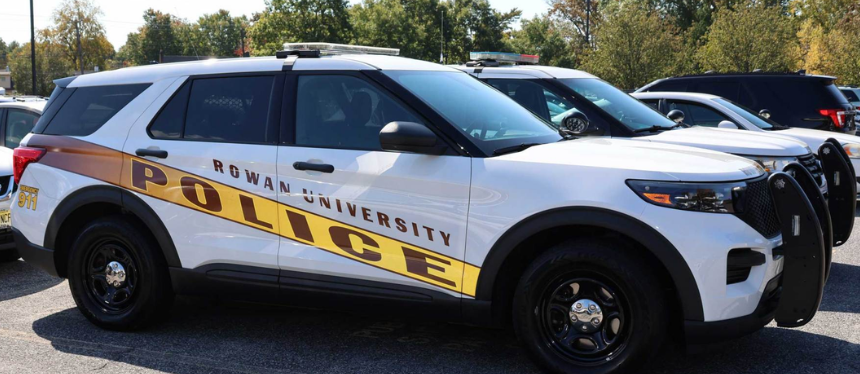
Rowan offers a comprehensive public safety program for the university community. We provide numerous services through the following sections: Police, Security, Parking, Dispatch Center, Crime Prevention and the Office of Emergency Management. We focus on preventive patrols, crime prevention programming, and the physical establishment of Crime Prevention Through Environmental Design standards throughout our campuses.
The department is dually accredited through the Commission on Accreditation of Law Enforcement Agencies (CALEA) and the International Association of Campus Law Enforcement Administrators (IACLEA). Our certifications ensure compliance with the rigorous accreditation processes, whereby law enforcement agencies must adhere to 475 standards, codes, and state-of-the-art best safety practices in the country. Our department is the first University in New Jersey to receive the prestigious CALEA recognition and one of 50 in the nation.
Overview
Campus Safety Tips
Keeping the residence halls and the campus safe and secure is a shared responsibility. All residents should become familiar with their surroundings and observe the following basic safety and security guidelines to help assure the safety and security of people and property in the residence halls and throughout campus.
- Do not share your keys, ID card or PIN number.
- Report lost keys or ID cards immediately.
- Lock your door, even if you are leaving for just a moment.
- Do not prop any exterior doors.
- Don’t let strangers follow you into the residence hall as you enter.
- Always exit the building promptly when the fire alarm sounds.
- Show proper ID to the security staff.
- Notify staff of broken doors and safety equipment.
- Call Police if you see any attempts to tamper with safety equipment or undermine security.
- Report suspicious activity to Police.
Prohibited Items
The items listed below are prohibited and should not be brought to your room. Staff and the New Jersey Fire Marshall conduct regular health and safety/fire safety inspections. Students found with prohibited items are subject to fines and potential disciplinary action.
- Air conditioners of any kind
- Dehumidifiers
- Appliances in traditional residence halls with the exception of a combination appliance (Microwave/Refrigerator) provided by the University contracted vendor. Prohibited appliances in traditional residence halls include, but are not limited to coffee makers with hot plates, toasters, panini grills, air fryers. These appliances are permitted in apartment kitchens only. Coffee/drink makers with an internal heating element are permitted in all housing areas.
- Ammunition
- Extension cords or multi-plug adapters that lack a built in surge protector/breaker. Power strips with built in surge protection are permissible. However, power strips, even with surge protectors, cannot be strung together or plugged into one another.
- Furniture, including bed risers that embeds any power outlets which lack an internal surge protector.
- Halogen lamps, or oil lamps and decorative string lights except in accordance with the string lights policy.
- Hoverboards
- Incense or incense paraphernalia
- Candles of any kind
- Curtains, wall tapestries, flags or any other wall covering (including pictures, posters, etc) that covers more than 50% of a wall or door. These items are permitted, but must cover less than half of any wall or door, as per NJ State fire code.
- Flammable or combustible liquids or gases, paint thinner, fireworks, explosives, or similar combustible material.
- Engines, engine parts, lubricants and fuels
- Fireworks, explosives, flammable liquids, fuels, paint thinner combustible materials, or engines.
- Live trees or wreaths from live foliage
- University, municipal or private property not authorized to be in the student’s possession. This includes University common area furniture from lounges or other parts of the building.
- Pets or animals including lab specimens (except fish in a tank of 10 gallons or smaller), unless approved as a service or comfort animal as required by applicable law.
- Space heaters
- Swimming pools
- Dart boards
- Weapons of any kind (e.g. firearms, swords, knives other than kitchen knives)
- Paintball guns, air riffles, bb guns, sling shots, arrows and any other sporting equipment, toy or device which may cause injury or which a reasonable person may believe is a weapon
- Illegal drugs or drug paraphernalia
Fire Safety
Fire safety and prevention is an important aspect of safety in residence halls. All residents need to be proactive to keep their living space safe, know how to respond in the event of a fire, and prevent unnecessary alarms that create a complacent attitude to fire alarms.
- Minimize clutter and keep your floor and all exit pathways clear.
- Learn where the nearest emergency exit, fire extinguisher and fire alarm pull station is located in your building.
- Always exit the building promptly when the fire alarm sounds.
- Take care when cooking to prevent unnecessary false alarms.
- Stay with your food while it is cooking on the stove. Keep heat levels low enough to avoid burning food or causing smoke. Remove all wrappings from food before placing in the oven or microwave.
- Never cover smoke alarms with anything that would prevent them from operation properly.
- DO NOT smoke or use candles inside any residence hall or apartment building.
- Use a surge protected power strip for all electronics.
RowanSafe App
The Rowan University Police Department has launched a new safety app to provide a one-stop shop for safety resources. Titled RowanSafe, the free app is available on the Apple and Google app stores through the App Armor service.
- Users can type in RowanSafe to find the app on the app store. RowanSafe allows users to report an emergency, initiate a mobile blue light activation in real time or send a tip to police directly from their cellular device.
- It also allows users to request a virtual walk home from campus police or to share their location with a friend. A virtual walk home request will allow campus police to monitor users as they navigate campus, ensuring they arrive safely. Sharing a location with a friend will give a friend the ability to monitor a user’s movement to a specific location.
- In case of a crisis, both the virtual walk home and the location sharing with a friend give the user the ability to immediately make an emergency call with a simple push of a button in case
For a better walkthrough the app, watch this video for a better understanding of how you can keep yourself safe in moments you need extra protection!
Emergency Evacuation Guidelines for Individuals with Disabilities
Rowan University's Divison of Fire Safety offers a general guideline for safe and efficient facility evacuation
for individuals with disabilities. These guidelines have been compiled from multiple sources, and have been organized into an array of well-known standards, best-practices and industry recommendations. Rowan University is fortunate to possess well-maintained fire systems for detection, notification, and suppression. These systems provide building occupants with the best chance of timely recognition and evacuation in a fire situation.
That being said, the evacuation of individuals with disabilities should always be given high priority in an emergency situation. Preparation is key, and these recommendations serve to help these individuals, and those around them, plan and practice for a fire event. Individuals with disabilities are their own greatest resource. They are the most familiar with their needs, and best understand what assistance they will require in the event of an emergency evacuation.
Below are some fire safety systems and options that can be implement best for fire emergencies:
Buddy System
- Identify roommates, classmates, staff members, Community Advisors, etc. who are willing and able to assist in the event of an emergency evacuation.
- Plan for an emergency by locating the closest, most accessible exit pathways; as well as safe locations such as fire stairwells (First) or sprinklered rooms with exterior windows and solid doors (Second).
- Practice for an emergency by familiarizing “buddies” with egress routes, refuge areas, and the level of assistance needed for evacuation.
Options During a Fire Emergency
- Evacuation – If able, all occupants must evacuate the fire building using marked stairs and corridors. Utilize the assistance of “buddies” or other able-bodied occupants. Proceed down the stairs and fully exit the building on the ground level.
Elevators will be inoperable during fire alarm activation.
- Area of Refuge (AOR) – If in immediate danger and unable to fully evacuate the building, proceed to a stairwell/AOR. Stairwells/AOR’s are typically sprinklered areas protected by a one-hour fire rated assembly (i.e. fire rated door, walls and ceiling) which affords valuable protection. Firefighters are trained to operate in stairwells and to check these areas for occupants needing assistance. These areas may have a two-way emergency communication system. If they do not have one, use a cellphone to call for assistance, or send a “buddy” for help.
Dial (856)-256-4911 or 911
- Shelter in Place – If you are unable to evacuate and not in immediate danger, remain in a room with a door and an exterior window (if possible). Close the doorand seal all openings with clothing or towels. Contact emergency services with your location and evacuation needs.
Dial (856)-256-4911 or 911
Emergency Communications
If you have a cell phone, keep it with you at all times. This will allow you to contact the Rowan Public Safety Communications Center to advise them of your location and evacuation needs. The Rowan Communication Center is staffed 24 hours a day by trained personnel who will direct Rowan Public Safety and the Glassboro Fire Dept. to your exact location.
Rowan Communications Center (856)-256-4911
If for any reason you cannot get through to the Rowan Communication Center, immediately dial 911, which will connect you to the Gloucester County Communication Center in Clayton.
Have any additional questions?
As always, practice good fire prevention habits regarding cooking, overloaded outlets and open flames. And, please, report any dangerous conditions or activities to the Fire Safety Division or Public Safety immediately.
If you ever have any questions or concerns, or require additional information or assistance with specialized evacuation planning, please reach out to the Rowan University Fire Safety Office at (856)-256-5095 or firesafety@rowan.edu