Basking Shark

Basking Shark
Basking Sharks
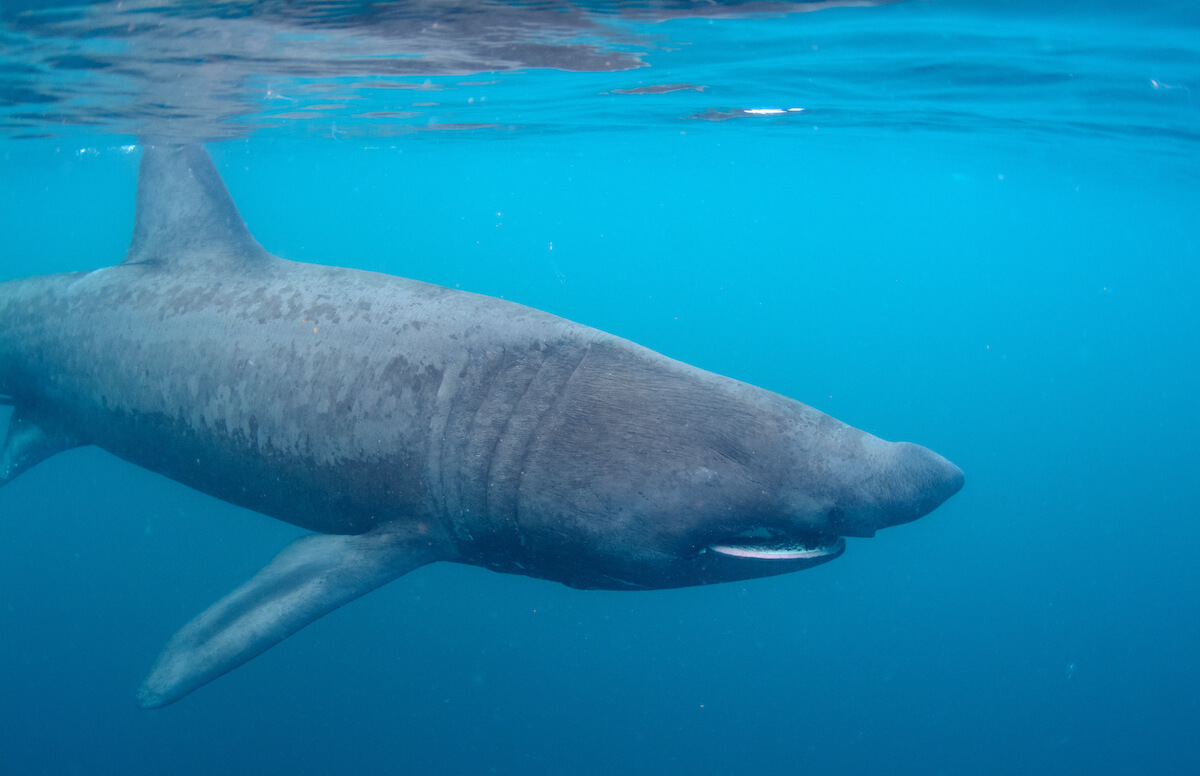
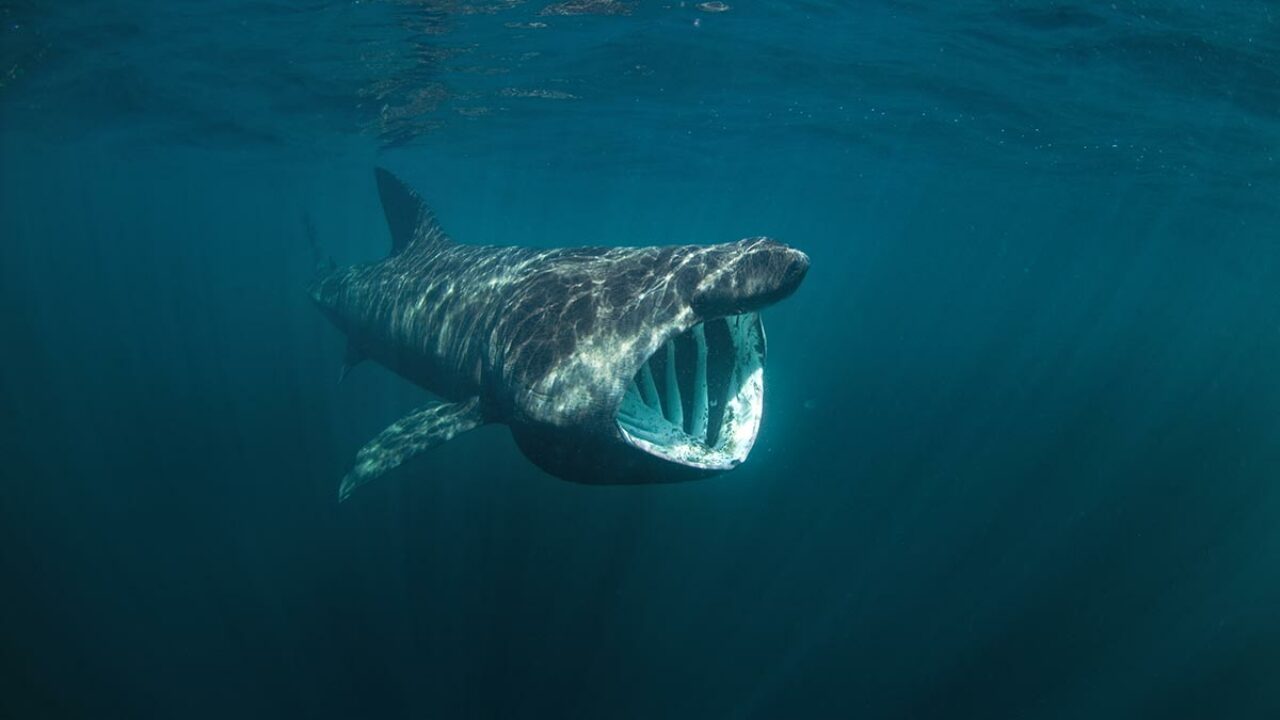
This slow-moving migratory shark is the second largest fish, growing as long as 40 feet and weighing over 5 tons. It is often sighted swimming close to the surface, huge mouth open, filtering 2,000 tons of seawater per hour over its complicated gills to scoop up zooplankton. Basking sharks are passive and no danger to humans in general, but they are large animals and their skin is extremely rough, so caution is urged during any encounters.Habitat
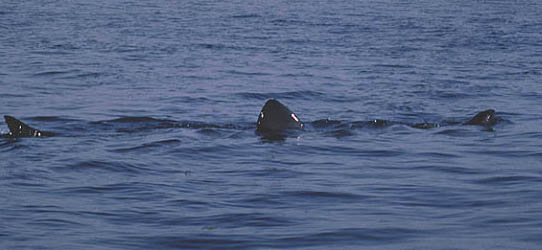
The basking shark is typically seen swimming slowly at the surface, mouth agape in open water near shore. This species is known to enter bays and estuaries as well as venturing offshore. Basking sharks are often seen traveling in pairs and in larger schools of up to a 100 or more. Its common name comes from its habit of ‘sunning’ itself at the surface, back awash with its first dorsal fin fully exposed.
Basking sharks are highly migratory. Off the Atlantic coast of North America it appears in the southern part of its range in the spring (North Carolina to New York), shifts northward in the summer (New England and Canada), and disappears in autumn and winter. Off the southwest coast of the United Kingdom in the northeast Atlantic, the basking shark feeds at the surface of coastal waters during the summer. These sharks are absent from November to March, suggesting a migration beyond the continental shelf during the winter months.
This is explained by the high zooplankton density (the primary food of the basking shark) that exists in these waters during late spring and early summer. Sightings of groups of individuals of the same size and sex suggest that there is pronounced sexual and population segregation in migrating basking sharks.
Mouth Closed vs. Open