How many of you have already been outside to spot Comet C/2025 A6 (Lemmon), Comet Lemmon for short? It's a reasonably bright comet; easy to see from dark skies with binoculars. There's another comet visible right now, but it's much fainter, making it a more challenging target. Use this guide to help you locate Comet C/2025 R2 (SWAN).
Comet SWAN was discovered recently, on September 11, 2025, by amateur astronomer Vladimir Bezugly using data from the Solar and Heliospheric Observatory (SOHO). At the time, it was estimated to be magnitude 7.4. Astronomers use magnitude to quantify the brightness of an object. It's an inverse scale - the smaller the number, the brighter it is. However, the magnitude scale is logarithmic, meaning that a difference of one magnitude corresponds to a brightness change of 2.5 times. For example, Jupiter has a maximum magnitude of -3 while Mercury's maximum magnitude is -2. That means that at their brightest, Jupiter is 2.5 times brighter than Mercury.
A magnitude of 6 is the typical limit visible to the naked eye. From dark skies, you may be able to see as faint as magnitude 7. Lower than that, you'll need equipment like binoculars or a telescope to help you see. The larger your optical aid (telescopes and binoculars), the fainter the object you will be able to view.
Comet SWAN has brightened somewhat since its discovery 2 months ago, but because it is a small, diffuse comet, you will still need binoculars to view it. Current estimates for its brightness put it at about magnitude 6.7. It should be visible with 50mm binoculars from dark skies.
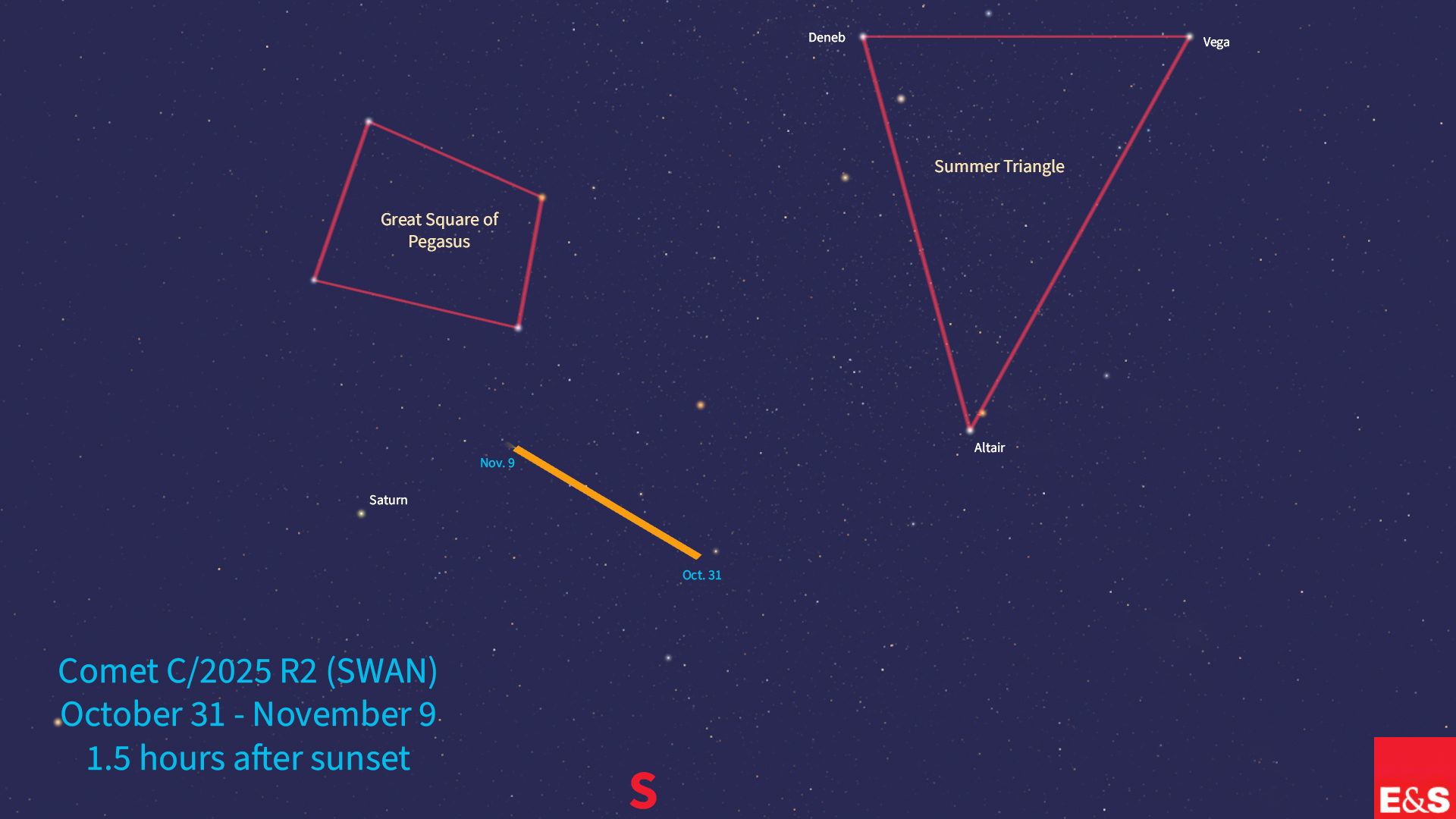
Comet SWAN has already made its closest approaches to the Sun and Earth. It is now making its way out to the outer edges of our solar system. Our colleagues across the US have been out imaging the comet and shared these photos with us. Let us know if you see it in the sky tonight!
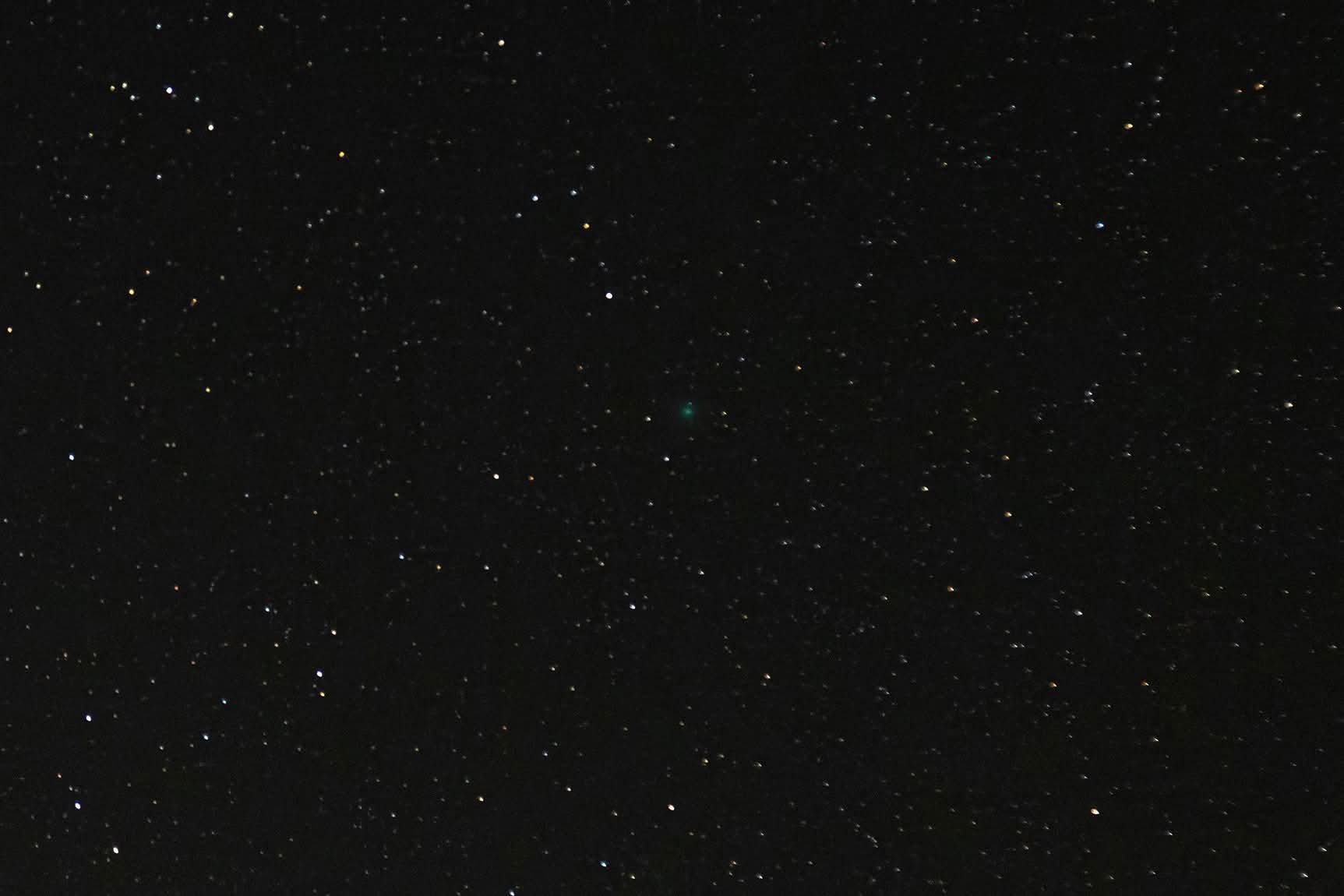
Comet SWAN is seen in the center of this image as a fuzzy green "star." Photo credit: John Meader
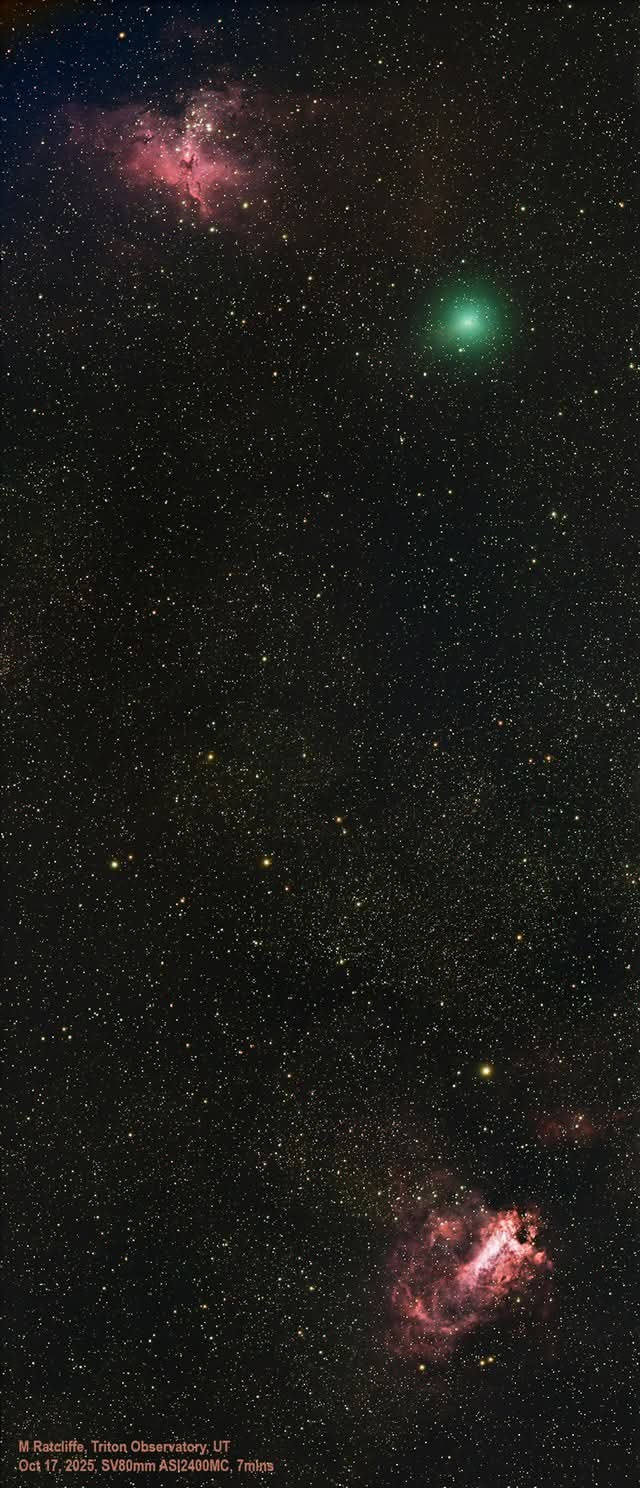
Our friend Martin captured this image of fuzzy Comet SWAN when it was near the bright red Eagle Nebula. At the bottom of the image, you can see another nebula, M17. Photo credit: Martin Ratcliffe