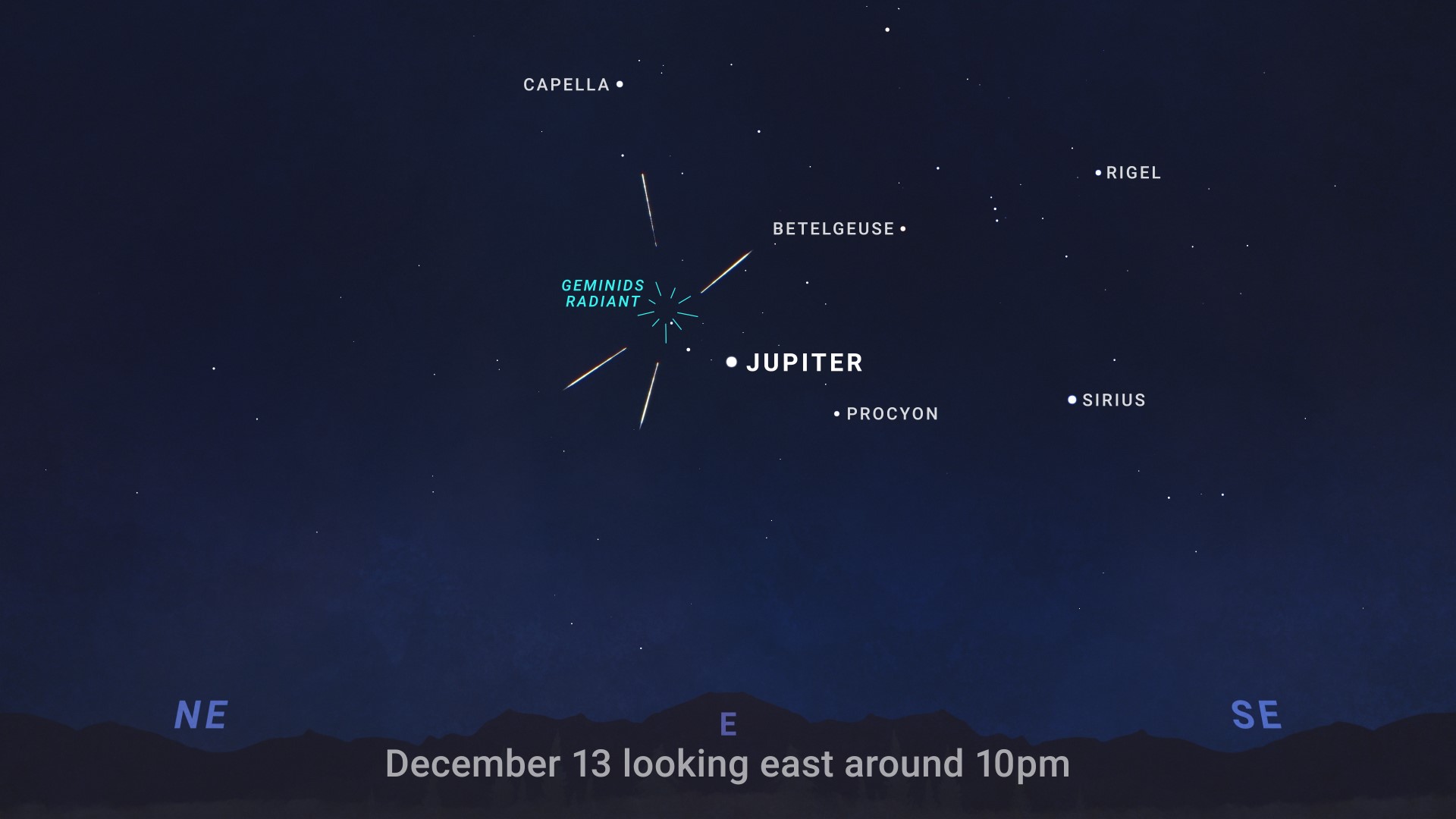
We're hoping for some clear skies to view the Geminid meteor shower this weekend!
Many astronomy enthusiasts consider the Geminids the best meteor shower of the year, often appearing as bright, colorful "shooting stars" and peaking with 120 meteors visible per hour. For Glassboro, that peak will occur overnight on December 13 into December 14. With snow forecasted overnight, however, we may miss the best parts of the show. But don't let that discourage you! The Geminid meteor shower is active from December 4 to December 17. They will be best viewed after 10 p.m. and away from city lights.
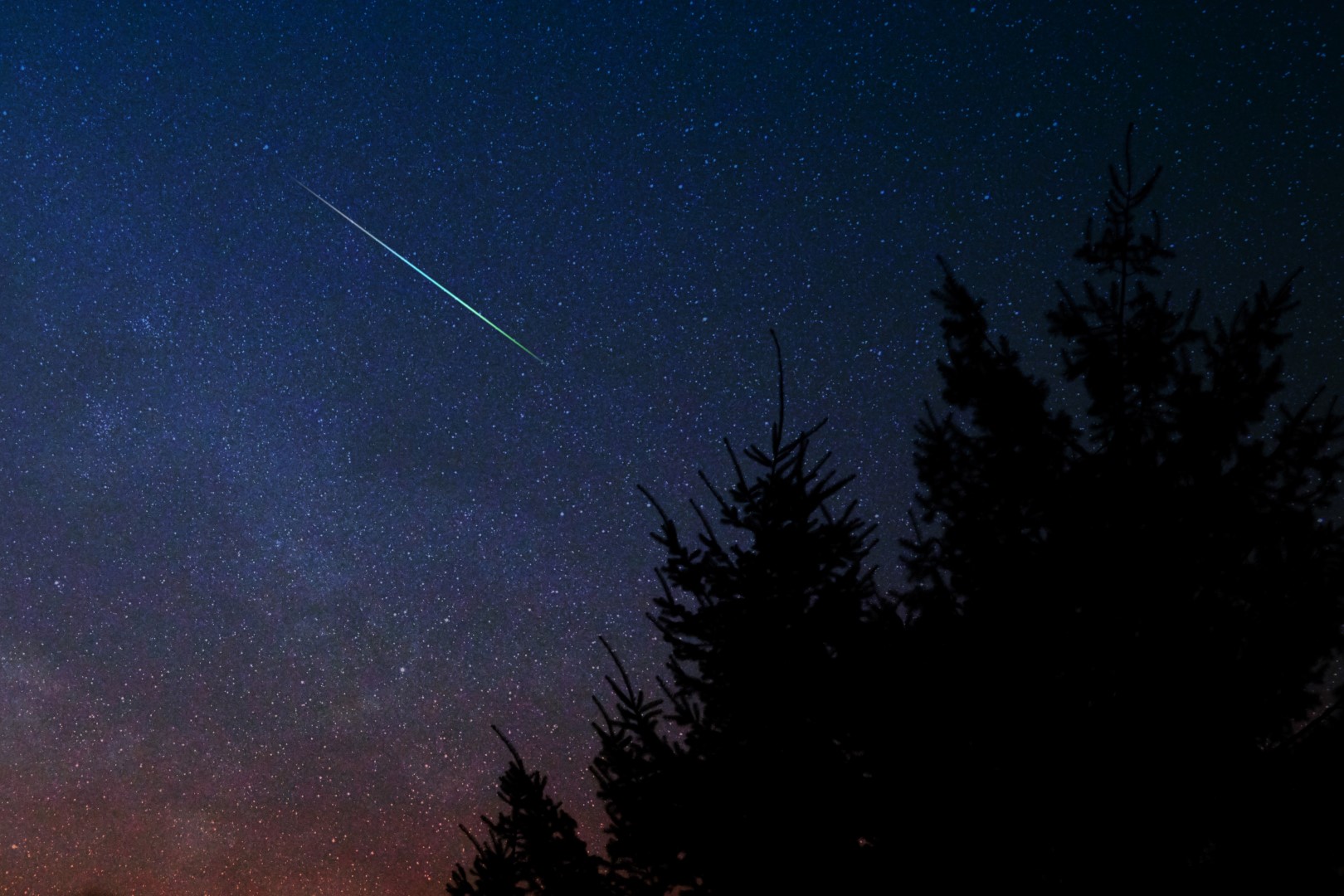
Unlike most meteor showers, the Geminids originate from an asteroid, not a comet. Asteroids, which are mostly rock, don't usually form tails as they get close to the Sun, but comets, which consist of rock and ice, will form a tail as the Sun heats their icy surface. When Earth passes through the debris left behind, we have a meteor shower. The ice and dust ejected from the comet burn up in our atmosphere, producing bright streaks of light called shooting stars or meteors.
Asteroid 3200 Phaethon is different - it does form a short tail as it approaches the Sun, and every December, we pass through its debris field and see the spectacular Geminid meteor shower. Scientists are still unsure why 3200 Phaethon acts more comet-like than other rocky asteroids. Previous studies of the asteroid show that much of the tail is sodium gas rather than dust, which could explain why the tail went unnoticed for years. However, gas tails don't create meteor showers. Scientists hope that the Japan Aerospace Exploration Agency (JAXA) DESTINY+ mission will provide some answers, but we may have to wait a while. DESTINY+ isn't scheduled to launch until 2028 and won't reach the asteroid until 2030.
In the meantime, head outside this month to see the colorful meteors for yourself - no special equipment required! Just find a dark patch of sky, away from city lights. Give your eyes time to adjust to the darkness; 15 minutes should be plenty. You'll spot the most meteors between 10 p.m. and 2 a.m. each night. The Geminid meteors will seem to originate from the constellation Gemini, but they can appear in any part of the sky. So dress warmly, pull up a chair, and enjoy the show!