"The Eagle has landed." Neil Armstrong uttered these words on July 20, 1969, from the surface of the Moon, after he and astronaut Buzz Aldrin became the first humans ever to land on another world. Several hours later, after a mandatory rest period, Armstrong became the first person to walk on the Moon. Five more successful Moon missions would follow, returning a total of 800 lbs of Moon rock back to Earth for scientists to study. These samples continue to reveal new information about the formation of our natural satellite and our solar system today.
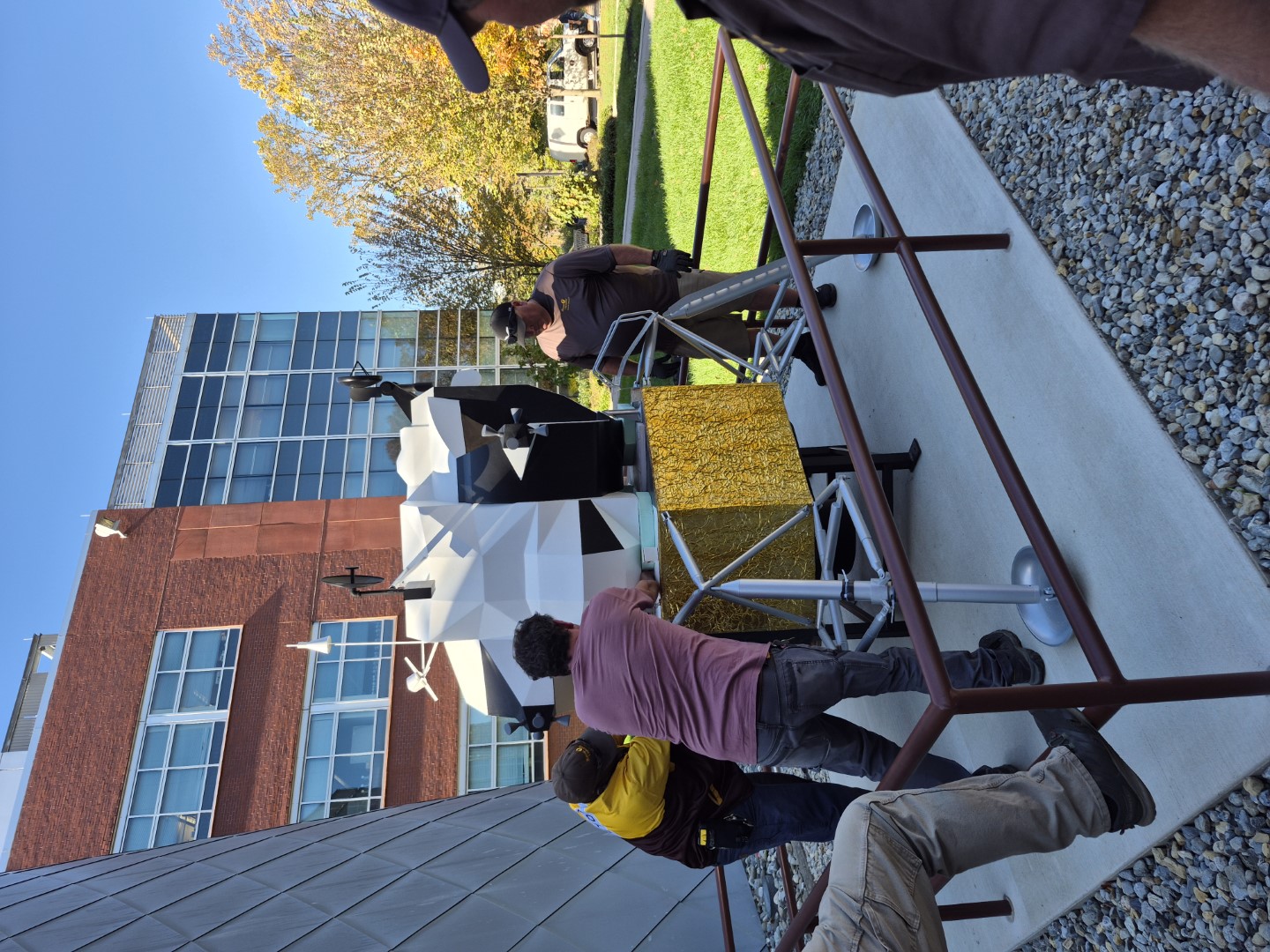
On October 21, more than 50 years after these historic missions, a new, smaller lunar lander made a landing in front of the Edelman Planetarium. Faculty, students, and Planetarium visitors can see the 1/3-scale model of an Apollo lunar lander in its new permanent home in front of Science Hall.
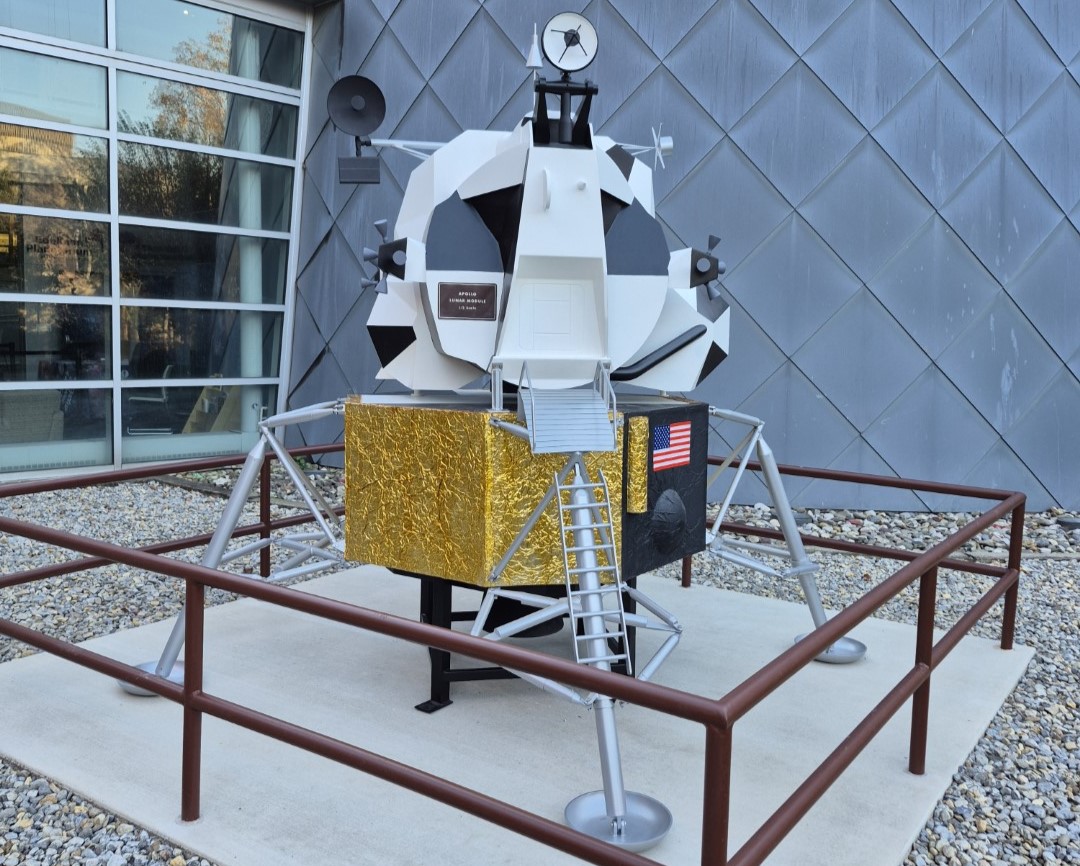
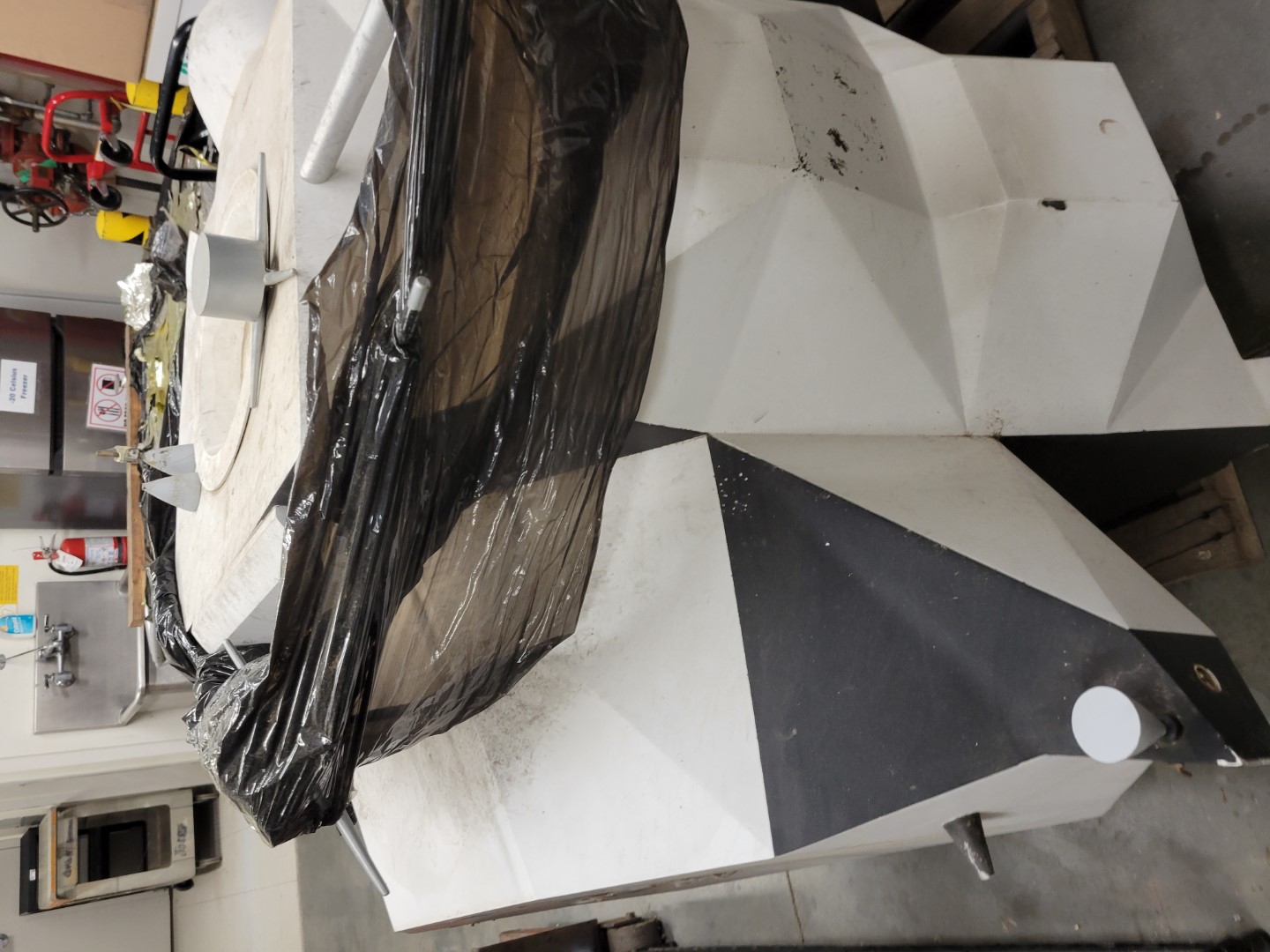
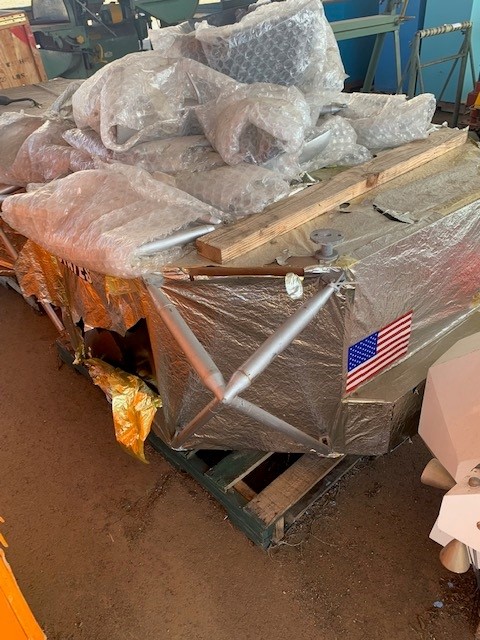
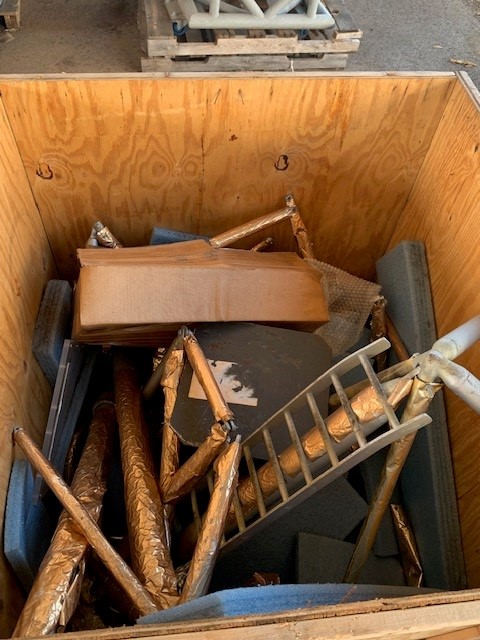
The model came to the Edelman Planetarium from the Marshall Space Flight Center in Huntsville, AL, in 2024 as part of NASA's Artifact Program. When it arrived, it was not ready for display. The lander had been displayed at Marshall for decades and required significant repair work before being prepared for display in Glassboro. We contracted the NJ-based and woman-owned fabrication shop StoneDog Studios to get the lander ready for its Glassboro debut!
The team at StoneDog spent five months cleaning and restoring the model to make it durable enough for outdoor display. A support base for the lander was added because the legs are not strong enough to support the model's weight on their own. Below are a few pictures of the lander before its restoration.
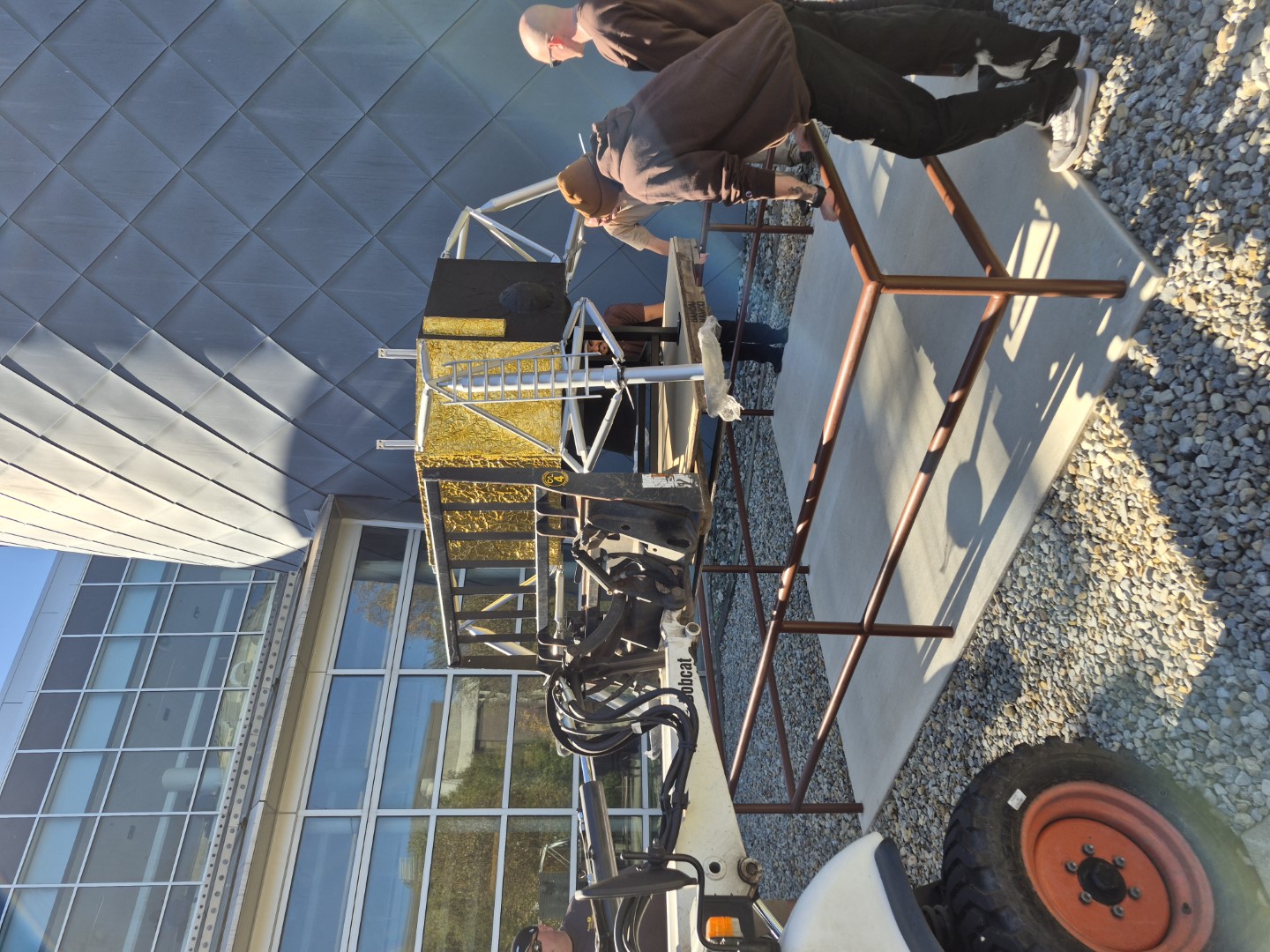
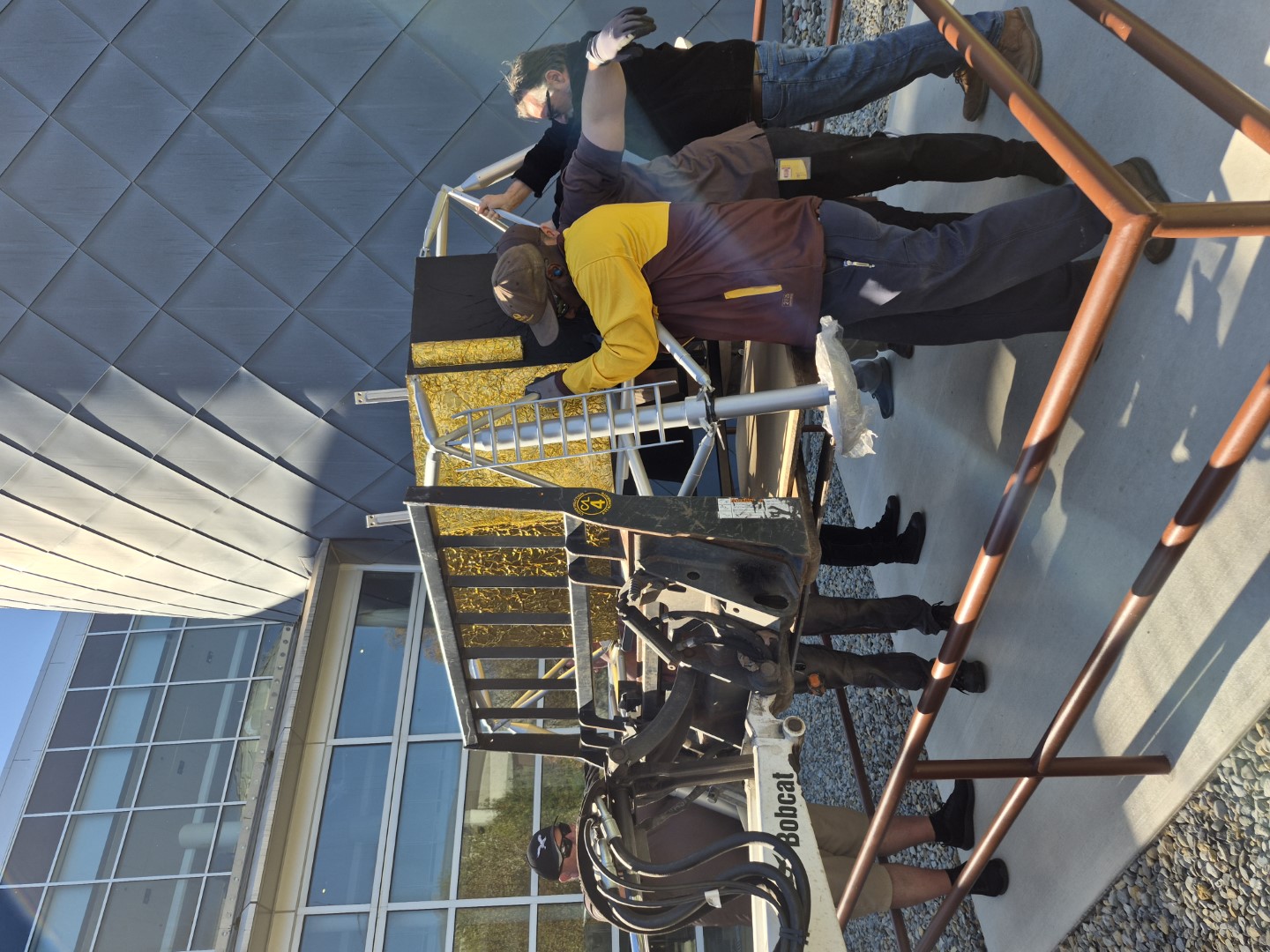
It took a crew of 9 people, a mix of Rowan's Facilities and Operations crew and two of StoneDog's fabricators, to maneuver the 800 lb model into position. It was brought to campus in two segments, each weighing hundreds of pounds. A forklift carried the pieces from the delivery truck to the pad before the crew manually lowered them into position. The entire process took several hours as they bolted the exhibit components together.
This project was funded by Rowan University alum and Planetarium founders, Ric and Jean Edelman. Thank you, Ric, Jean, and StoneDog Studios for the beautiful new addition to our campus!
We look forward to sharing the story of human spaceflight, past and present, using this new exhibit for generations to come. See the lander yourself during your next visit to the Edelman Planetarium!