Founder of a Rowan Medicine institute ensures its impact will outlive him
Founder of a Rowan Medicine institute ensures its impact will outlive him
Founder of a Rowan Medicine institute ensures its impact will outlive him
Interim Dean of the Rowan-Virtua School of Osteopathic Medicine and founder of the NeuroMusculoskeletal Institute (NMI) Dr. Richard Jermyn and his husband, Christopher Clements, have established a planned gift to support the NMI in perpetuity.
A graduate of the Philadelphia College of Osteopathic Medicine (PCOM) and a physical medicine and rehabilitation physician, Jermyn has been with Rowan-Virtua SOM for more than 26 years. He has worked in many underserved communities for addiction medicine, suicide prevention and vaccine programs and continues to lead clinical research trials alongside medical students.
“This school is very important to me,” said Jermyn. “Our mission is our number one priority and our mission is why I stay. We see things differently because we believe in healing the mind, body and spirit. It was an easy decision to make it part of our estate.”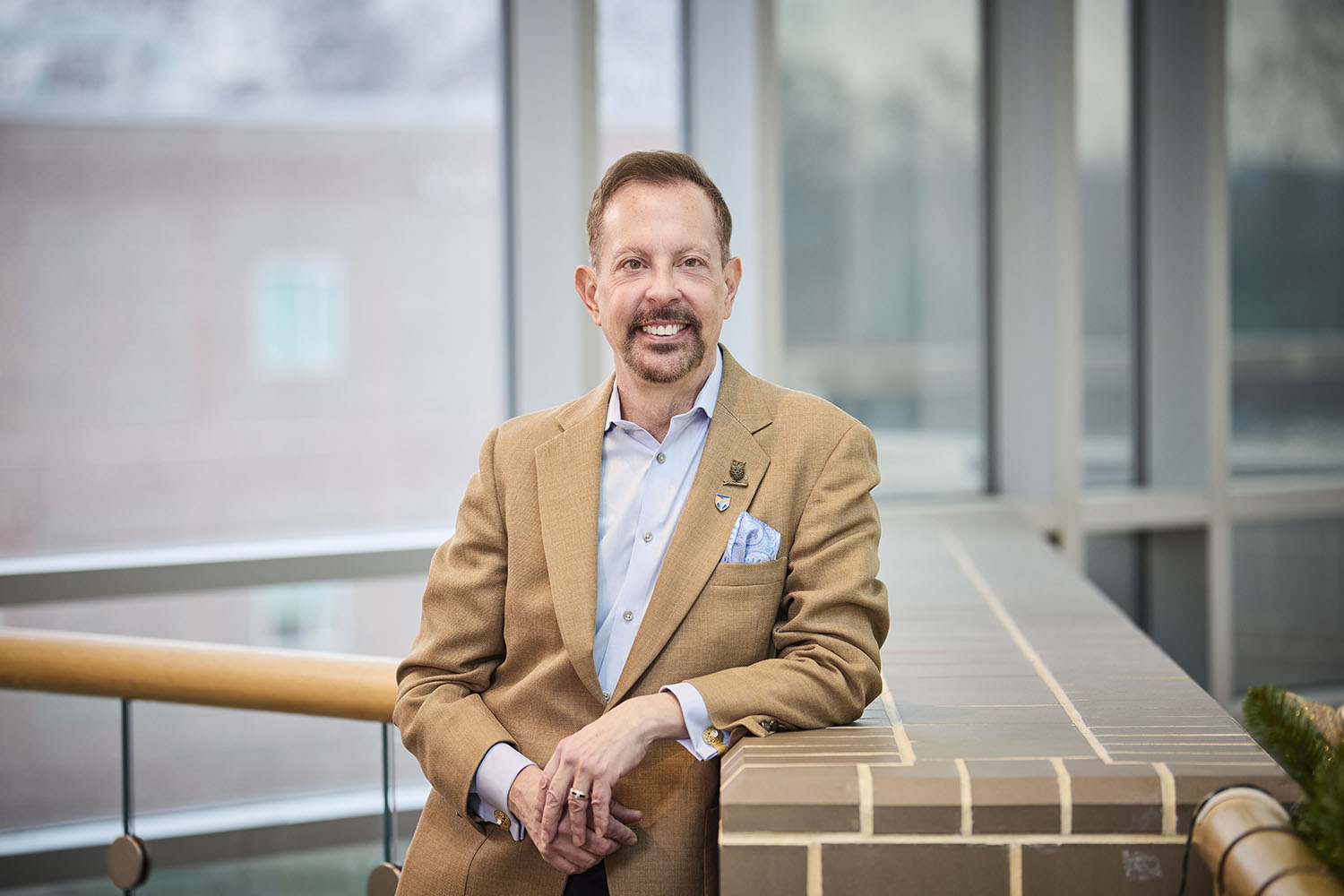
From a biology major and music minor at Temple University to a physician who others now look to when they “can’t figure out how to help their patients,” Jermyn had a unique path to Rowan-Virtua SOM. Now considered a pioneer in the field of pain management, he has become one of the most influential healthcare leaders in the nation whose clinical trial research interests have exceeded over $25 million in funding.
Working largely in healthcare roles from a young age, Jermyn spent time as a transporter at an inner-city hospital in Philadelphia as an undergraduate. Thanks to the one doctor who would “give him the time of day,” Jermyn ended up at PCOM. After his subsequent residency in physical medicine and rehabilitation at Temple University Hospital, Jermyn found himself entering the field during the midst of the HIV/AIDS crisis. When he joined what was then UMDNJ-SOM, Jermyn remembers he didn’t have a lot of support for wanting to help those who were in pain.
“People always like to ask me, ‘What’s the ticket to being successful?’” said Jermyn. “I like to tell them that it’s doing something that no one else wants to do and being good at it.”
Jermyn worked with patients in pain management, but it wasn’t long before he noticed something “magical” happening—HIV patients were no longer dying. “That’s when I started what became the NeuroMusculoskeletal Institute.”
Growing from one of the first pain management institutes in the nation, the research done by Jermyn and his team of likeminded physicians and medical students has transformed the way health professionals treat musculoskeletal pain management, especially in response to public health crises over the last two decades. The services and resources provided by the NMI have expanded to include osteopathic manipulative medicine; addiction treatment; rehabilitation; physical therapy; on-the-road treatment; telehealth visits; training community healthcare workers and peer recovery coaches; continued education on the alternatives to pain management other than opioids; and more.
“We’ve done a great deal, but there’s always more to be done,” said Jermyn. “One of the biggest things we’ve learned is that we had to go out into the community to help. The marginalized communities, immigrants, migrant workers, homeless, shut-ins—what are we doing for them? All the research and clinical trials prepared us to do that. Everything we learned we were able to bring to the opioid crisis, the COVID crisis, and now we continue to keep our boots on the ground and do impactful work.”
When Jermyn isn’t dedicating his time to transformational education and treatment, he enjoys being with his husband Christopher Clements and many great nieces and nephews. Clements has been an integral part of Jermyn’s journey with the NMI and an overly supportive spouse when it came to their estate plans.
“We’ve been together for 23 years,” said Jermyn. “He has been so involved and so supportive. When you’re preparing in this way, you start to think, ‘What do you want to outlive you?’ We know musculoskeletal pain and patients in need of help will outlive us, but now we have a way to make sure the NMI and its services will outlive us too.”
“I will do whatever it takes,” said Jermyn. “I will make sure the work outlives me.”


